Monday, July 27, 2015
First day of school
As teachers, we are always thinking about the first day of school. Last year was my first year in 4th grade, and I'll readily admit the first day of school was boring. At that level, I believe in loving but firm, even on the first day of school. I've been thinking a lot actually about the first day of school this year. I'm left pondering, should I do a STEM project, a team building lesson, start on my interest inventories, do the multiple intelligences test. I'm still not sure, but while I'm thinking about what to do, my friends and family have sent this interesting activity to me at least a dozen times this summer. I'm so tempted to try it out. I really think it will lead to some interesting writing, but I'm huge on consequences (good and bad), so this just might be a perfect activity for the first day of school. The lesson and activity are free, while the 7up and m&ms aren't. 😉 lesson is this something you would try on the first day of school, towards the end of the day? The teacher who created it suggested after lunch. I'm already getting goose bumps about the first day of school! I love school!

Friday, July 24, 2015
Open House idea
I was using my blog for my adolescent literature class, but I've always wanted a blog but just didn't know how to start one. Now that I have one up and running, I'm not wanting to reinvent the wheel. :)
I always have great intentions about giving students something on the Open House just to ease their nerves, but the week back there is never enough time to create anything. I found this the other day, and I'm going to use it. (I'm determined to get it all together!) I thought I would share! It is free and you can edit it, so really it is a win-win. Here is the link, check it out:bag topper
I always have great intentions about giving students something on the Open House just to ease their nerves, but the week back there is never enough time to create anything. I found this the other day, and I'm going to use it. (I'm determined to get it all together!) I thought I would share! It is free and you can edit it, so really it is a win-win. Here is the link, check it out:bag topper
Monday, July 20, 2015
The Maze Runner
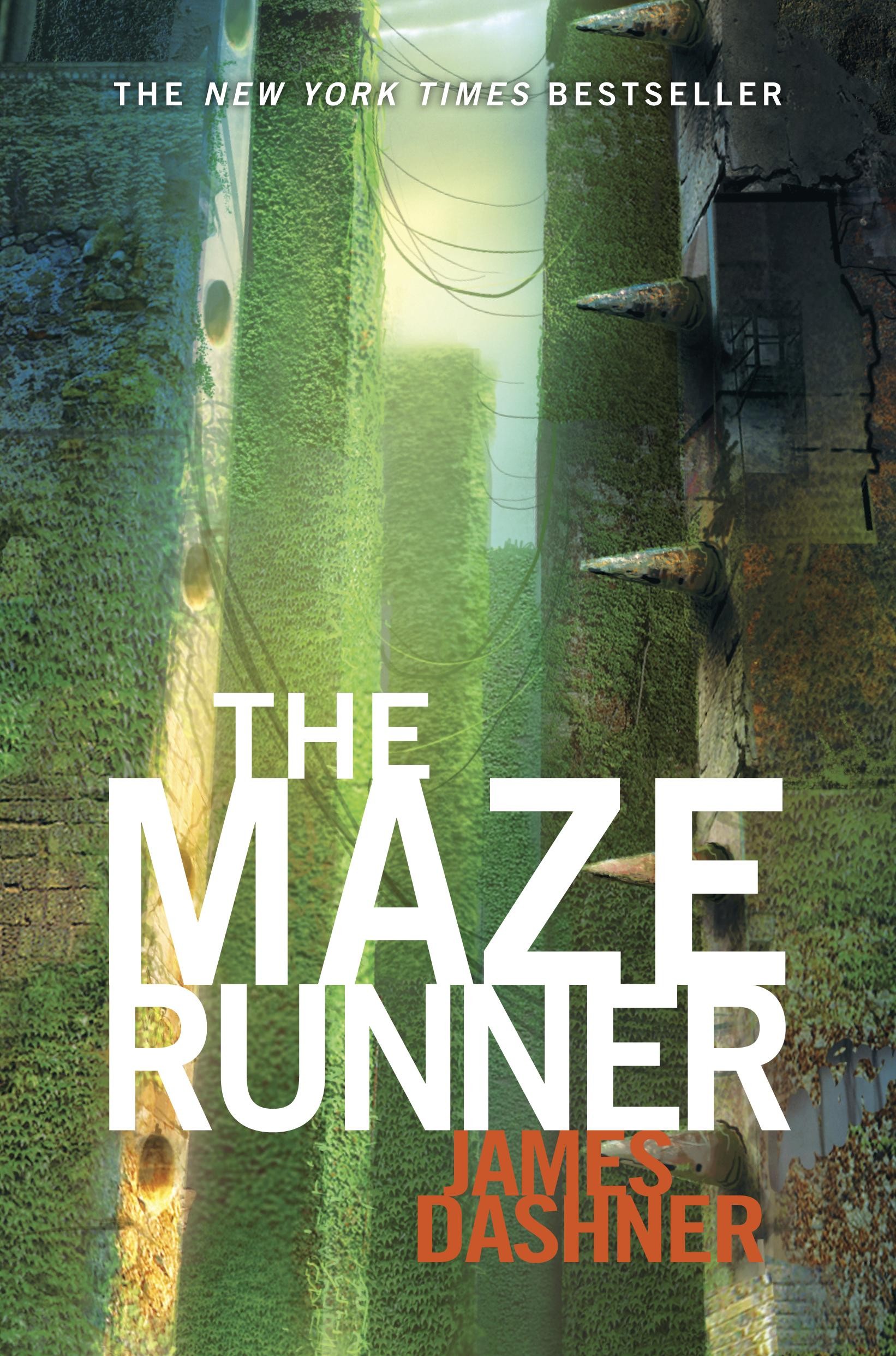
One of the main characters, Thomas, wakes up in an elevator with no prior memory of what his life was like before that moment other than his name is Thomas. When the elevator opens, he is pulled into this place called Glade by a bunch of other boys who are in the same predicament as he is. The boys are trying to solve the maze. Beyond the maze are creatures known as Grivers. If you get stung by a Griver, you go through a process called the Changing. It isn't pleasant to go through the Changing. The whole point is to just to do what you can to stay alive while working on the maze.
One day a girl shows up. It is the first time a girl has ever shown up. Almost as soon as she shows up in the elevator, she tells the boys things are about to change, then she passes out into a coma. She is the last person sent into the Glade. Soon after she arrives, things start changing. Things like the sun disappears and the doors to the maze stay open all night long. The boys start to become extremely agitated by the events.Meanwhile, Thomas feels like he know the girl who is in a coma, Teresa. He discovers a code made by their movements. Eventually they all decide to go for it, to get out of the Maze through a Griver's hole. Half the boys don't make it out. The others discover this is an experiment by their creators, who are called Wicked. Then they are rescued by a rebel group, but it appears it it just another part of the experiment. Then the experiment goes on with another set of children. The ultimate goal appeared to be finding a group of children resourceful enough and intelligent enough to save humanity from the Flare.
Thomas seems like a hero, but is he the child to save humanity? There are several other books to this series, not only other books after this story but several prequels as well. I would use this book to teach about friendship, environmental damage, order vs. chaos, perseverance, and bravery. I think this book is geared more toward a 9-12 grade level, because of content that was covered in the book.
Random House created a great file for The Maze Runner. It includes pre reading/post reading activities and discussion questions to help aid comprehension of the story. It is located here. I also found a blog that has numerous resources from powerpoints for vocabulary, study guide, author discussion of the book, and a learning guide. The blog is called Linda's links to literature. I also found my favorite book trailer for The Maze Runner:
The Giver

After Jonas was selected as the receiver of memory, he trains with a man we know at the Giver. During his training, he teaches Jonas about emotions, feelings, and color. Jonas eyes are opened to the hypocrisy that has taken place in his community. He learns about the charade through memories. Jonas realizes people have given up their own personal freedom for a community built on an illusion that everything is perfect. They are in fact being controlled by the Elders, and trained on how to respond to their community environment.
The Giver and Jonas come to an agreement that things need to be changed, they hatch a plan that allows the Giver to stay behind and help people deal with their new found emotions, while Jonas quietly slips away. Unfortunately their plan must change at the last minute.
Jonas also realizes that "releasing" infants really means their death. His own family recently had taken in a child who had problems sleeping at night. The elders were scheduled to release this child. That sent Jonas into panic. He chose to take the child and flea on his bicycle. Once he gets away from his community, all of the memories Jonas has is released back to the Giver and then back to the people in the community. This forces the the people in the community to experience the past memories and emotions. In the mean time, Jonas and Gabriel have traveled for days to the point that Gabriel is starving. At the end they come across some snow and a sled. They ride the sled until they reach some Christmas lights. This is where the story ends, the reader is left with what happened to both Jonas and Gabriel.
There is a second book written after this book that reveals the fate of the the community and Jonas and Gabriel called Messenger. It is an interesting read, because students can discuss democracy vs. communism or socialism. The advantages and disadvantages of all three forms of government. I also came across an interesting website that has the book more as a graphic novel with a summary for each chapter. It might help with comprehension, located here. I also found a web page that is loaded with ideas for teaching The Giver. It has a web quest, a group project creating a Utopian society, discussion questions, literature circles, and study guides, just name and few. That web page is located here. There are several book trailers located on youtube, as well as the trailer for the movie. This one is my favorite:
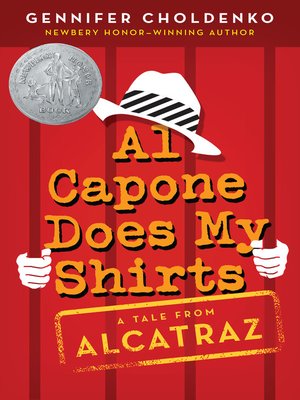
Al Capone Does My Shirts
Al Capone Does My Shirts by Gennifer Choldenko is a story about a boy named "Moose" Flanagan and his family. Moose is a nickname his sister gave him. His real name is Matthew. They move to Alcatraz in the 1930's, because Moose's dad obtained a job being an electrician and prison guard in the federal prison.
 In the beginning Moose becomes resentful for his family being uprooted from their home back in Santa Monica, California. He misses his friends and grandmother. The whole purpose of the move was so Moose's sister could attend Esther P. Marinoff school in San Fransisco. Moose's sister, Natale, has autism. Although it is never stated in the book that she has autism, but it is implied. His parents try several times to enroll her in the school without success.
Moose also begins to make friends and adjust to life on Alcatraz, for example he becomes friends with Piper and they start a laundry cleaning business using Al Capone's name. He also comes to accept his sister's differences, and he tries to protect her as much as he can. After several failed attempts to get Natalie in the specials school, Moose is desperate and writes a note to Al Capone. Moose writes him asking Al to help his sister get into the school. She is accepted into a new program for older children at the school. Moose then receives a letter from Al Capone stating "Done".
I really loved the first paragraph, it set the tone for the book. Moose stated "Today I moved to a twelve acre rock covered with cement, topped with bird turd and surrounded by water". That sentence made me laugh! I knew this book was going to funny, sarcastic, and very much from a boy's perspective. It is something one of my own sons would say! There are several themes that are mentioned throughout the story, they included mental disabilities, peer relationships, child-parent relationships, and general adolescent angst. I would use this book with 5th or 6th grade class. Here is the book trailer I liked the best:
There are so many online resources to use with this book! An introduction could be a free powerpoint found here. I also located a neat webquest. The webquest is a zip folder. In order to open it, your computer must be able to download and open a zip folder. It has 6 activities that are engaging and can be used in groups, pairs, or independently. I also found a fun free game to play to review the story. All you need is a copier, paper, and pieces to move around the board with. I also found a discussion guide that identifies what level the questions are. Here is a link for ideas on how to create an advertisement for Piper and Moose's laundry business. Instead of using actual shirts, I would use butcher paper. Students can also discuss what life was like on Alcatraz. Here is an online tour that includes former prisoner's tales of life on Alcatraz.
There are other online tours to choose from on youtube, if for some reason you don't care for the music on this link. I also found a really neat scavenger hunt, that students start before they read, so they can build up some background knowledge. I really enjoyed this book and all the resources that can be found free for teachers!
In the beginning Moose becomes resentful for his family being uprooted from their home back in Santa Monica, California. He misses his friends and grandmother. The whole purpose of the move was so Moose's sister could attend Esther P. Marinoff school in San Fransisco. Moose's sister, Natale, has autism. Although it is never stated in the book that she has autism, but it is implied. His parents try several times to enroll her in the school without success. Moose also begins to make friends and adjust to life on Alcatraz, for example he becomes friends with Piper and they start a laundry cleaning business using Al Capone's name. He also comes to accept his sister's differences, and he tries to protect her as much as he can. After several failed attempts to get Natalie in the specials school, Moose is desperate and writes a note to Al Capone. Moose writes him asking Al to help his sister get into the school. She is accepted into a new program for older children at the school. Moose then receives a letter from Al Capone stating "Done".
I really loved the first paragraph, it set the tone for the book. Moose stated "Today I moved to a twelve acre rock covered with cement, topped with bird turd and surrounded by water". That sentence made me laugh! I knew this book was going to funny, sarcastic, and very much from a boy's perspective. It is something one of my own sons would say! There are several themes that are mentioned throughout the story, they included mental disabilities, peer relationships, child-parent relationships, and general adolescent angst. I would use this book with 5th or 6th grade class. Here is the book trailer I liked the best:
There are other online tours to choose from on youtube, if for some reason you don't care for the music on this link. I also found a really neat scavenger hunt, that students start before they read, so they can build up some background knowledge. I really enjoyed this book and all the resources that can be found free for teachers!
Sunday, July 19, 2015
The Realm of Possibilty
 The Realm of Possibility by David Levithan is a short book, but unconventional. Each chapter discuses the lives of 4 people and there are 5 chapters. The reader has to really pay attention to when the author moves on from each character each chapter. I did enjoy the story, because it summarizes each character and discusses the role of each person in the story. Each person represents issues that adolescents face each day. I believe the genre of this story is realistic fiction. The book is interesting, because sometimes the font changes, sometimes the type is only on half the page, and sometimes there are only a few lines about the character. This is considered a free verse. It makes it interesting to read, but in several sections there were no capital letters after punctuation. As an educator, that quickly became a pet peeve of mine.
 The whole point of The Realm of Possibility is to realize anything is possible. The writing and the story are both unconventional. Both my teenage son and I read this story, and we had different reactions and thoughts. It's one of those stories that you have to read in order to see how you feel about it. Some of the topics covered are drug use, cancer, gay teenagers, stereotypes, multiculturalism, and sex just to name a few. The readability of the book is 7th grade, but with the tough social issues tackled in the book, I would use with with eleventh and twelveth graders.
I found a great book review that students could respond to on youtube.I also found another really great trailer that can be used as an introduction to grab students' attention here. I like using interesting trailers, because my students were excited about reading novels and chapter books when I had a trailer. Students like to be read to as well, so here is a link to a reading from the book. Students could create a poem based on their life experiences. The teacher could pair up students, then have students create poems about each other. Each student could take a person in the story and write more about that person from the character's own point of view.
As a teenager, my son could relate to many of the characters in the story. He said this quote really stood out to him, because many times he has felt like this.
“I never felt the urge to jump off a bridge, but there are times I have wanted to jump out of my life, out of my skin.” -David Levithan The Realm Of Possibility
Below is an example of one of his poems in the story, with my pet peeve, no capital letters after punctuation.

Wednesday, July 15, 2015
Please Ignore Vera Dietz

Please Ignore Vera Dietz by A.S. King has been on of the hardest books to keep my attention in the adolescent literature genre I am currently reading. I feel like it flips back and fourth too much, but like everything in life, that is just my own opinion. I felt 50 pages in and I was still building up the plot, when I wanted to know what the story was about.
The story was about a girl named Vera. She spent her youth growing up in a inner city neighborhood. Her mom taught her to be "street smart", which included ways to avoid the creepy guy. She also had a childhood friend called Charlie Kahn. They had many things in common and had a great friendship, they even secretly loved each other. Then at the age of 12, Vera's mom leaves, and its just Vera and her dad. In addition, Vera and Charlie start to become distant 4 months before he dies, because of Charlie's choices in friends and activities such as drinking and smoking pot. Charlie's girlfriend also tells Charlie lies about Vera. Charlie then spreads rumors that aren't true about Vera and even throws dog poop at her (ewww!). One night everything just comes to a head. Charlie asked Vera to met her. He explains that his girlfriend is going to kill him. Vera thinks he is just blowing off steam and nothing is going to happen. Ultimately Charlie does die and Vera is the only person to know the truth. Charlie also leaves her a series of letters explaining what led up to his death.
About 9 months after his death, Vera is still trying to deal with things. She decides to work on her relationship with her dad and go to the police to clear Charlie's name. It wasn't easy for Vera, because she is sacred about what Charlie's girlfriend will do and she has her own family problems to deal with. Once she is able to tell the police her story, her and her dad take a road trip to work on their relationship.
There are several themes that can be taught using Please Ignore Vera Dietz, some of those could include trust, honestly, the dangers of drinking, peer pressure, and choices/consequences just to name a few.I found a neat Prezi that could easily be used to help aide understanding of the story. One lesson I would do is a character analysis over how Vera and Charlie had changed from the beginning of their lives to the end of the story. Adding a character chart to help remember each character and their role in the story would be great to have students work on. I also found questions that could be used to help with comprehension of the story. There is also a very good book trailer. The author of Please Ignore Vera Dietz, A.S. King also has a blog. It is located here. Visiting her blog, the class could learn more about the author and her life.
Monster

Another conscious grabbing book I've read was Monster by American writer Walter Dean Myers. The writer tells the story in an interesting way by using screenplay and a journal. The story is about an 16 year old African American male named Steve Harmon. He is arrested and put on trial for being a lookout in a robbery turned murder. During the court hearings and being in jail, Steve wonders if he is a monster. He questions many things about himself and other inmates. He is really overcome with the need to examine who he is when the prosecutor accuses him of being a monster. Steve decides his journal just isn't enough, and he recalls his experiences in film club with Mr. Sawicki. He decides to use those experiences in film club to create a screenplay of this event in his life as a way of venting, questioning, and examining his life. The story takes place several months after he was acquitted of all charges.
There were 4 people who were put on trial for this act. Some stated Steve had a role, while others said he didn't. As the reader you were left to dive into your own stereotypes during the trial. Ultimately Steve was acquitted, while one of the other boys who was in a similar situation accepted a deal and was given twenty five years. It was clear that boy was part of a gang, though I didn't feel that the book proved his guilt beyond a reasonable doubt. Perhaps that was goal though. While the other two boys were major players in the robbery and ultimately the death of Alguinaldo Nesbitt.
I really enjoy books that require me to think, and this book left me questioning my own stereotypes and what exactly is the truth much like Hate List but with a twist. I would use this book for 9-12 grade because of the more mature themes. I could use this book to teach about labeling people, diversity of experiences, peer pressure, compare and contrast. Compare and contrast can be used to compare Steve to Cruz, who was the tattooed gang member, but was the same age as Steve. We could also compare and contrast Steve and King, who was responsible for the murder. Students could write their own screenplay of an experience they have had involving peer pressure. In addition, Steve was left confused about his attorney's demeanor towards him. I suspect she felt like he was guilty, but students could write about why they think his attorney gave him the cold shoulder, and use examples from the book to justify their answers. I like to use attention grabbers when I start a novel. I found a really awesome one here. There is also a really great interview with the author, Walter Dean Meyers, about Monster located here. I noticed on youtube with the book trailers many people have commented about how much they liked the book, and how they are reading the book in their classes. I though that was in interesting side note, simply because the book is getting students to read and respond in a social media environment.
Tuesday, July 14, 2015
Persepolis The Story of A Childhood
 Another amazing book that I recently finished is Persepolis The Story of a Childhood by Marjane Satrapi. It was a pretty quick read, because it is a graphic novel. I enjoyed the historical aspect of the book. The story is an autobiography about Marjane growing up in Iran in the 1970s and 1980s.The period of time that this story covered included the turbulent times of the Shan of Iran, the Islamic Revolution, and the Iran-Iraq War. The reader is exposed to what a young woman's life was like during oppressive regimes in the middle east, and quite frankly it's not an easy life. I read the first book, there are several others to read as well. Even though Marjane's family wasn't religious, she was forced to wear a veil and attend a religious all girl school after the Islamic Revolution. One time scud missiles from Iraq landed in her neighborhood and killed her Jewish friend. Another time she was accosted by the moral police. Another time she bought items off the black market.
Critics of her books have suggested she lived a posh life compared to others during this time frame. Her family was well off and could send her to a different country during parts of her life. She answers this by saying in an interview, this was my perception as a ten year old with a different social economic status than most. Her book certainly gives us a glimpse of what it is like living in the middle east during a very turbulent time frame of world history. It is a glimpse we might not have without this book. This book was made into a movie, and this is the movie trailer. I found an interview with the author on youtube. It does have one bad word in it, but the viewer can listen to her tell her story. It is located here.
I can see an educator using this story in a variety of ways. One of which is to teach about World History from a different point of view. A teacher could use this book to teach about the Islamic Revolution and Iran- Iraq War detailing what life was like during those periods. Promoting tolerance of other cultures and coming of age in a different culture are other themes that can be used with this book. One could also use this book to teach literary elements such as visual imaginary and story telling. I would use this book to teach grades 8-10.
Subscribe to:
Comments (Atom)